
Engagement Process
Overview
Glendale Unified School District is committed to inclusive, transparent, and meaningful community engagement as part of the Facility Master Plan process. To ensure a comprehensive understanding of needs across the District, input was gathered from a wide range of stakeholders, including district leadership, school administrators, students, families, and community members.
Community Meetings
Glendale Unified held seven community engagement meetings across the District and issued multiple press releases to encourage attendance and participation.
Principal Interviews
As part of this effort, every school principal was interviewed prior to site walks to provide insight into their campus’s unique context and needs. These conversations included a review of current campus layouts, aerial views to understand surrounding conditions, and discussions of any pressing concerns that may not be immediately visible during onsite visits. High level feedback from each principal is provided below in each school’s profile.
Community Survey
The District also launched a public survey, available from October 2025 through January 2026, to allow broad participation and gather input from as many voices as possible. Language accessibility was a key priority, and survey and engagement materials were made available in multiple languages to support meaningful participation across Glendale’s diverse community. Throughout the engagement process, the District prioritized equity by seeking input from all school communities and ensuring that feedback was meaningfully included in planning considerations.
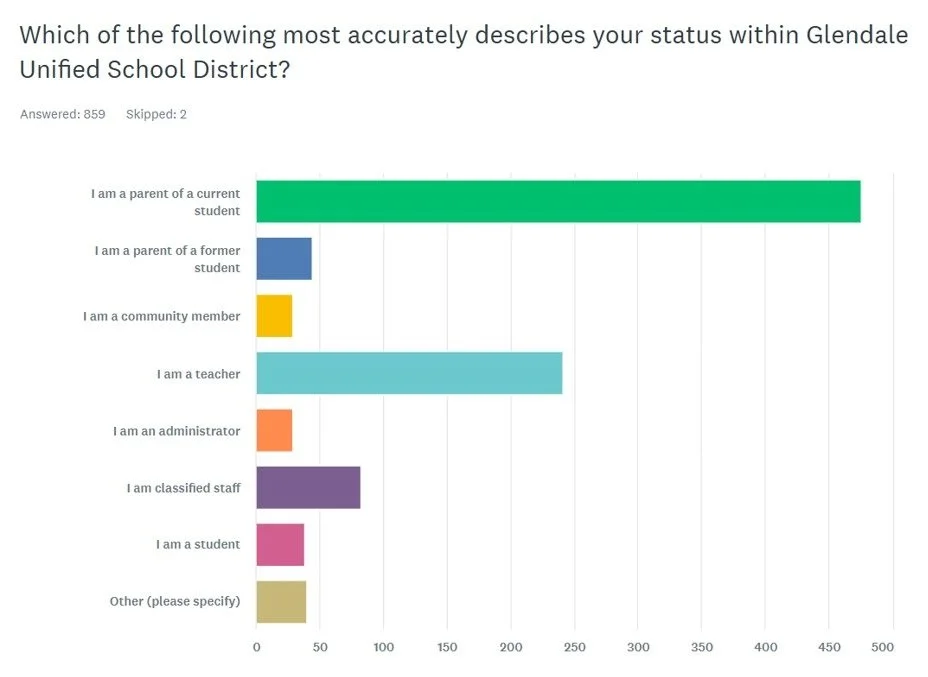
Community Survey: Key Takeaways
Program Facilities
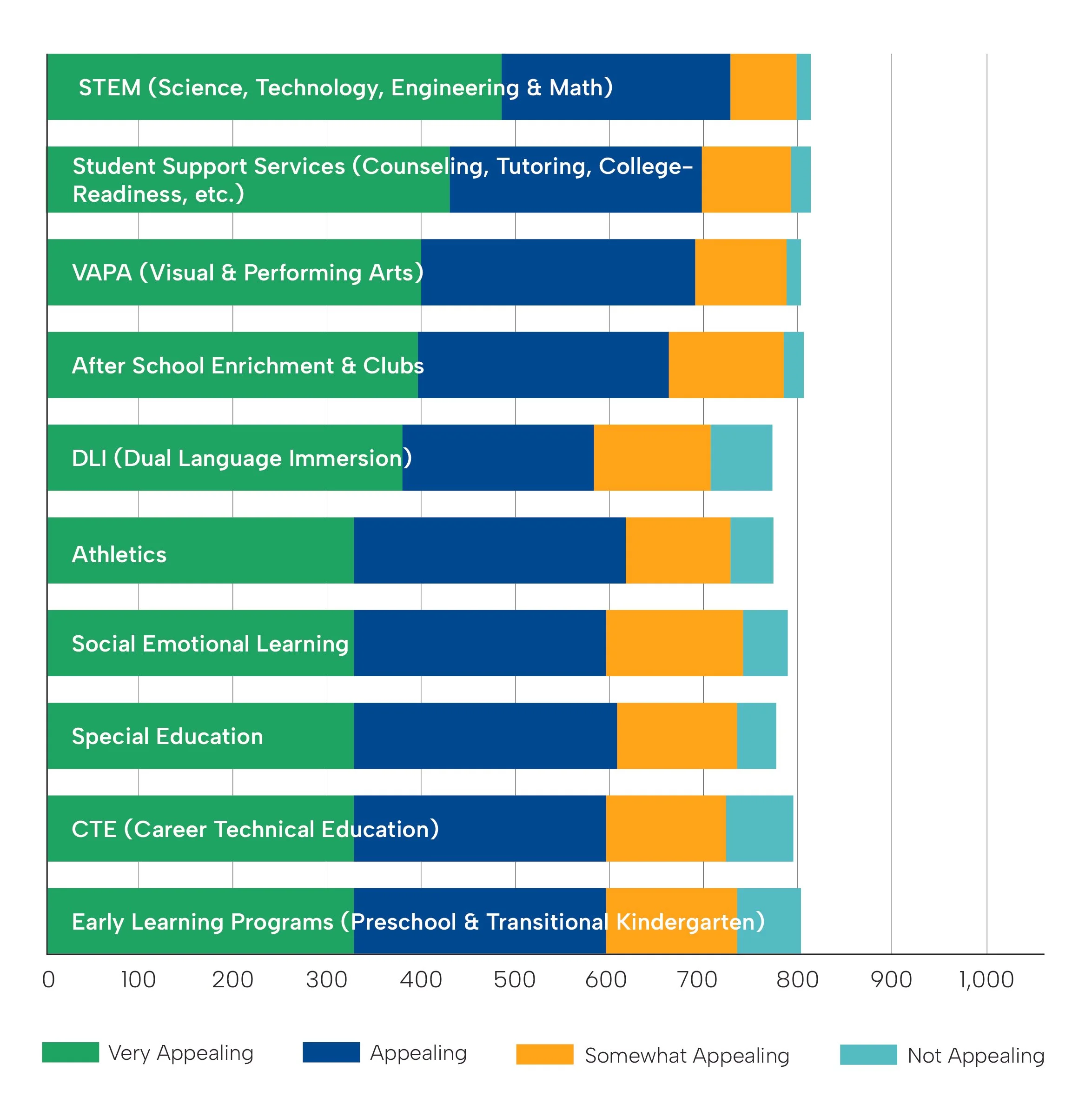
We want to understand which programs are most appealing to the community. Please rate the importance of investing in facilities for the following programs.
It would be great to have additional space on campus to hold meetings and after school activities.
“
Response from Dunsmore Elementary
“
Facility Upgrades
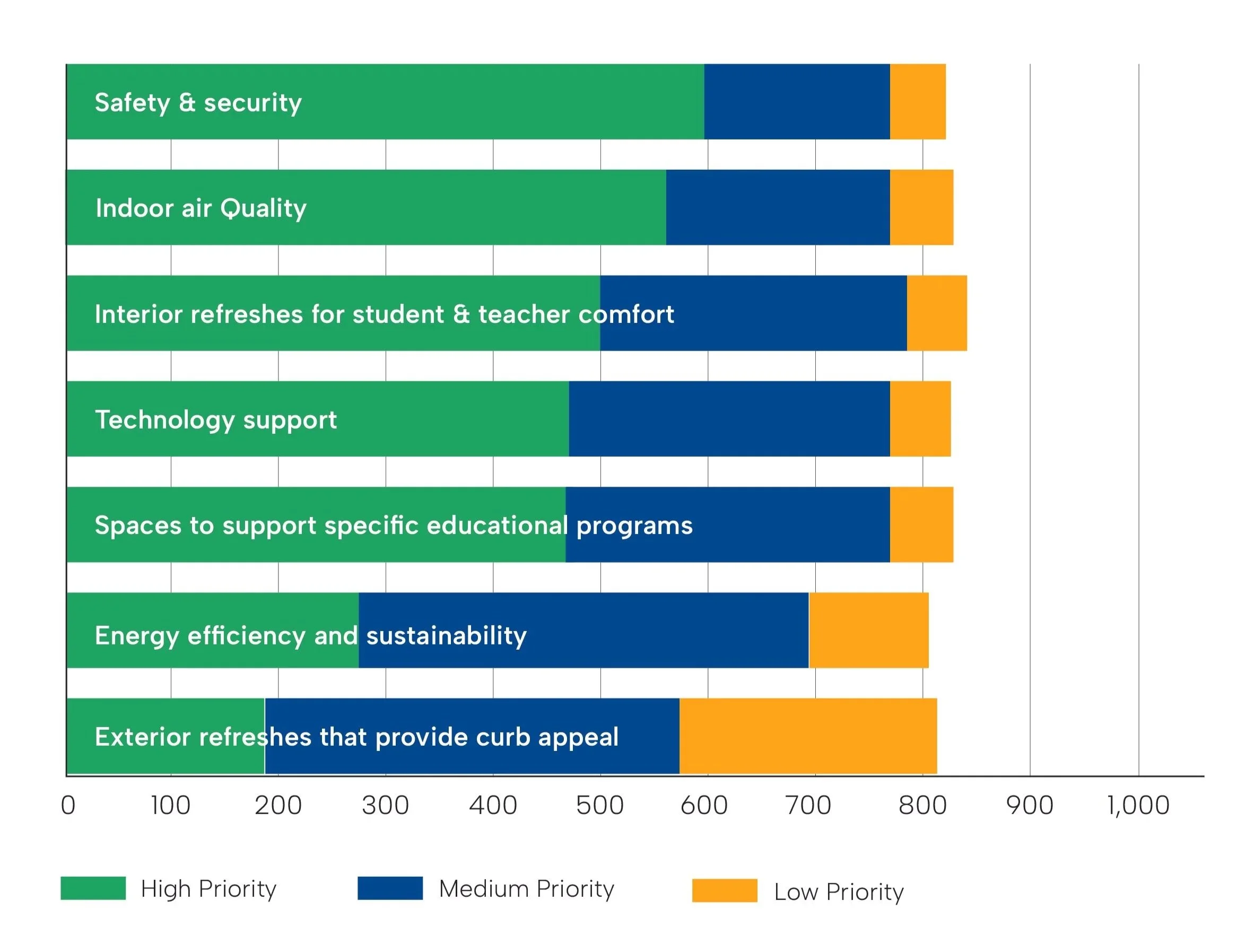
In your opinion, which types of facility upgrades should the district focus on at your school? Please rank the following using a high, medium, and low priority scale.
We need much more shaded areas for our children during the hot months; including more trees for cooling.
“
“
Response from Edison Elementary
Summary of Findings
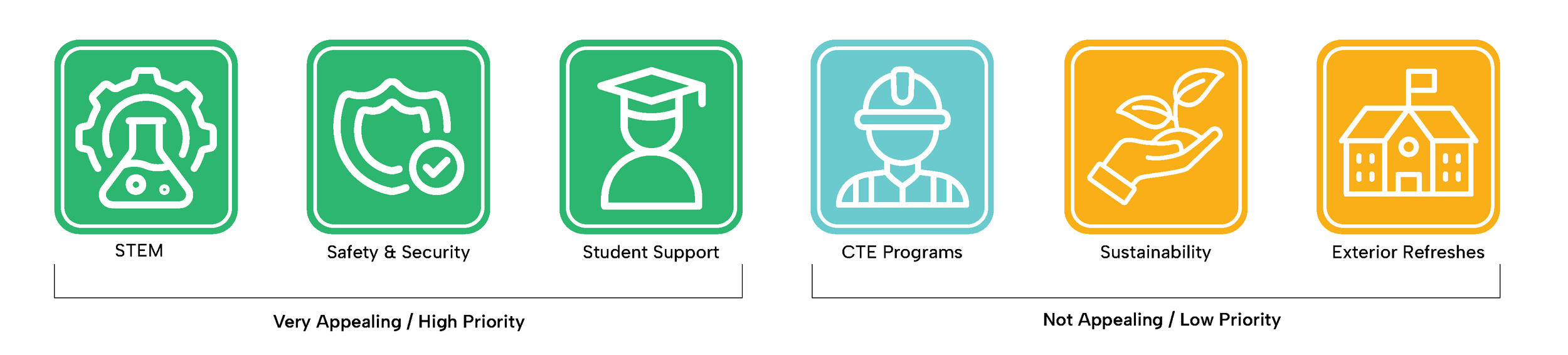
The survey results show broad community support for investing in a wide range of educational programs, with STEM programs emerging as the most appealing overall. Student support services, visual and performing arts, after-school enrichment, and dual language immersion also received strong levels of support, indicating that respondents value both academic rigor and whole-child development. While interest spans many program areas, the feedback suggests a clear desire for adequate and flexible facilities to support instruction, enrichment, and extracurricular activities. This is reinforced by open-ended comments emphasizing the need for additional on-campus space to accommodate meetings and after-school programming.
When respondents were asked to prioritize types of facility upgrades, safety and security stood out as the highest priority across schools, followed closely by indoor air quality and interior improvements that enhance student and teacher comfort. Technology support and spaces dedicated to specific educational programs also ranked as high priorities, reflecting the need for modern, functional learning environments. Lower-priority areas included exterior refreshes and curb appeal, though respondents still noted the importance of environmental comfort—such as increased shaded outdoor areas and tree coverage—especially during hot months. Overall, the data suggests the community is most focused on upgrades that directly impact student safety, health, and day-to-day learning conditions.
Thank you for your valuable feedback and participation!
Elementary School Feedback Summary
Principals from each elementary school in the district shared input through a facilities survey and conversations with our team about what is working well and where improvements are needed on their campuses. The following bullets highlight the key themes that emerged across elementary schools.
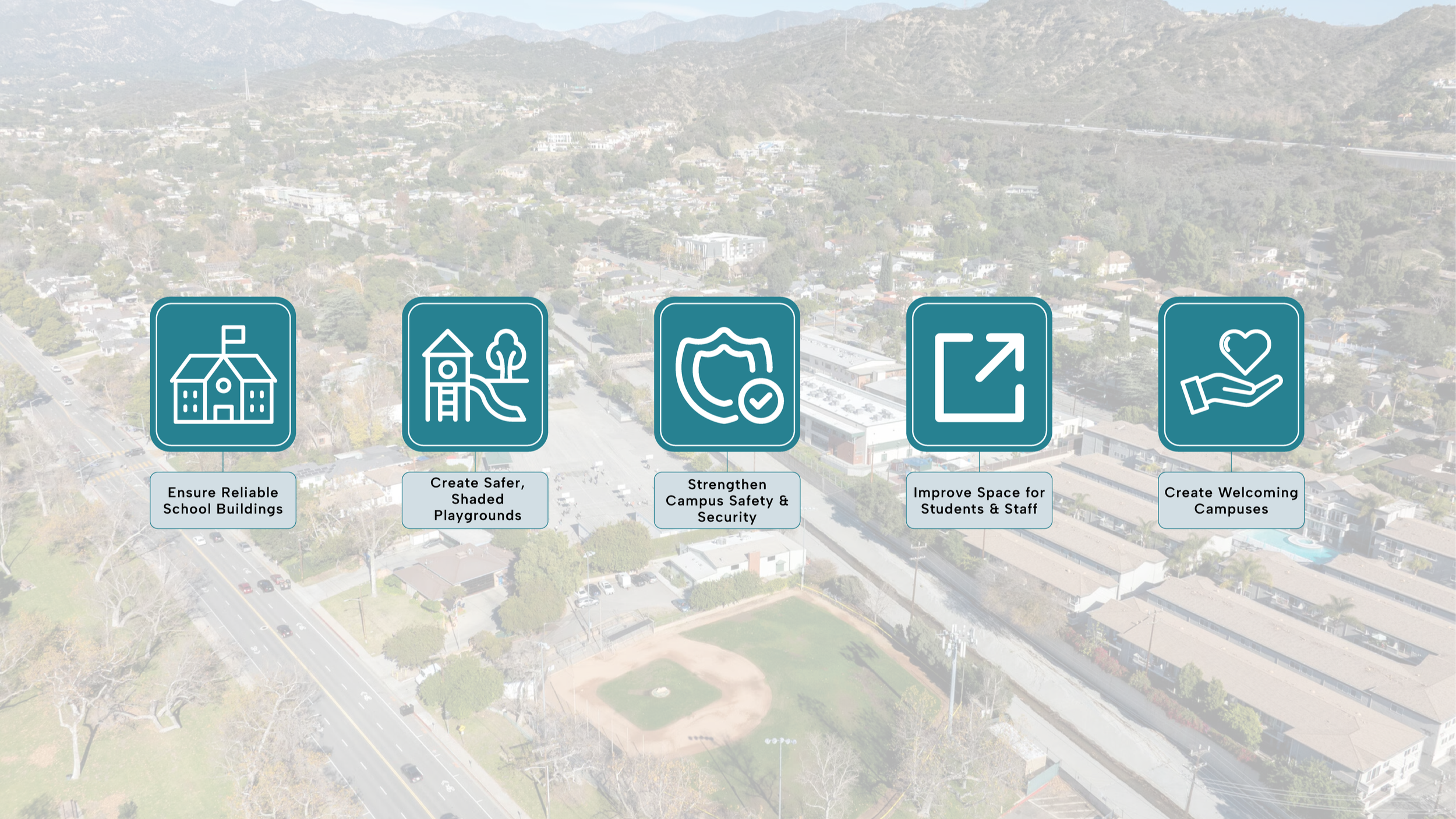
Key Takeaways
Aging infrastructure and reliability issues are a major concern, including plumbing failures, HVAC breakdowns, leaks during rain, and deteriorating flooring, all of which disrupt instruction and raise health concerns.
Playground safety and outdoor conditions are frequently cited, with cracked asphalt, failing playground surfacing, sinkholes, poor drainage, and a strong need for permanent shade structures.
Campus security and supervision challenges include limited camera coverage, unsecured gates, low fencing near play areas, and front-office configurations that do not adequately control visitor access.
Severe space constraints are common, especially for storage, special education services, staff work areas, and after-school programs, with many campuses reporting they are “out of rooms.”
Modernization and campus pride needs are emphasized, including repainting, refreshed signage, updated restrooms, and improvements that make schools feel welcoming, identifiable, and purpose-built for elementary students.
Middle School Feedback Summary
Middle school principals across the district participated in a facilities survey and follow-up discussions with our team to provide feedback on current conditions and priorities. The following bullets summarize the major themes identified across middle school campuses.
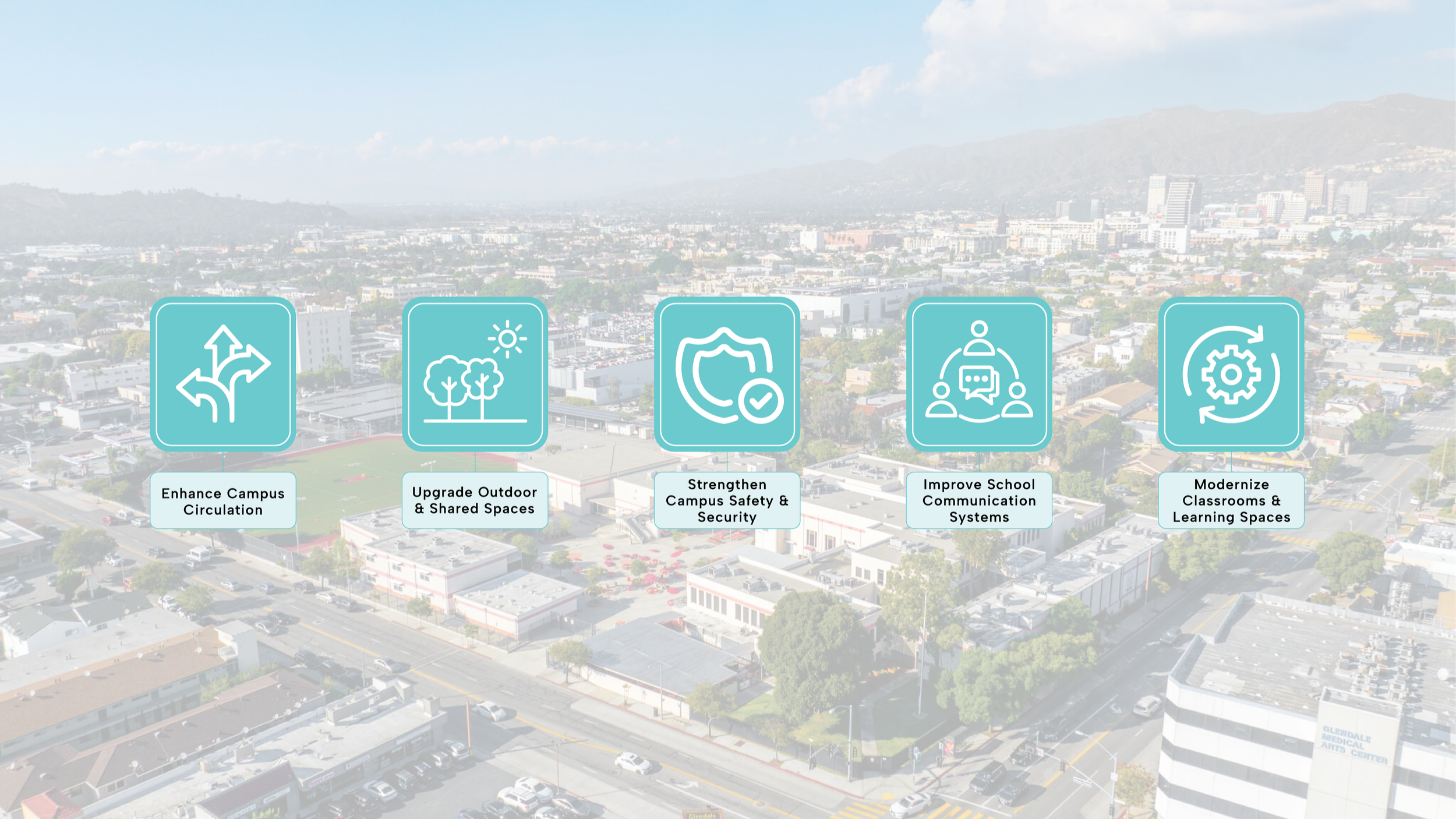
Key Takeaways
Safety and circulation issues are a top concern, particularly deteriorating stairways, uneven concrete, poor drainage, and outdated entry configurations that create student safety risks.
Outdoor and shared spaces such as fields, lunch shelters, playgrounds, and amphitheaters require upgrades, with repeated requests for shade, resurfacing, turf replacement, and lighting.
Security systems are insufficient for campus scale, with requests for additional cameras, improved gate controls, localized alarms, and better coverage of student movement areas.
Interior systems are outdated or inconsistent, including PA systems, intercoms, and classroom phones, which principals note are unreliable during daily operations and emergencies.
Overall campus condition and appearance is a concern, with worn finishes, aging buildings, and a need for repainting, resurfacing, and facility upgrades to match current enrollment and use.
High School Feedback
High school principals from across the district provided feedback through a facilities survey and discussions with our team regarding campus conditions, challenges, and future needs. The following bullets reflect the most common themes that emerged across high school sites.
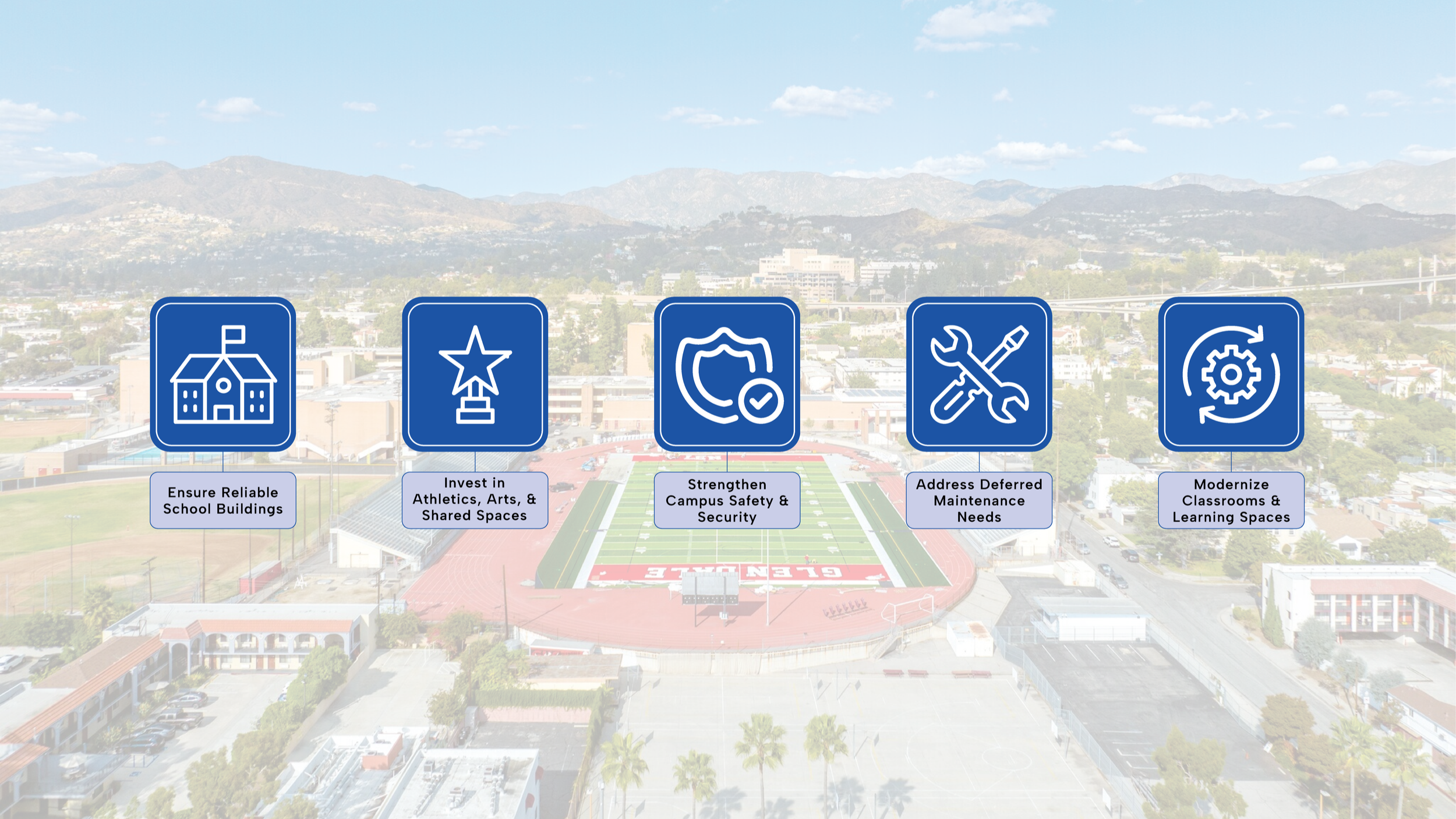
Key Takeaways
Large-scale infrastructure and building systems dominate concerns, including leaky roofs, failing HVAC systems, outdated plumbing, and electrical issues that affect multiple buildings.
Athletic, performance, and large assembly spaces require significant investment, such as unsafe gym floors and bleachers, damaged fields and turf, aging locker rooms, and deteriorating auditoriums.
Security coverage and alarm reliability are inadequate for campus size, with limited camera coverage, malfunctioning alarm panels, and inconsistent monitoring of high-traffic areas.
Deferred maintenance has compounded over time, resulting in multiple unresolved work orders, ongoing water damage, cracked concrete, and temporary fixes becoming long-term problems.
Modernization for instructional programs is a priority, including updated science labs, music and culinary facilities, improved technology infrastructure, and refreshed interiors to support contemporary high school programs.
Q1: What helps create a sense of community at schools in Glendale?
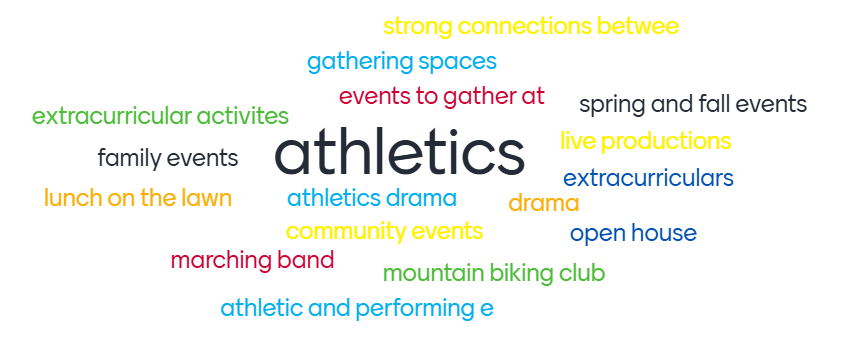
When community members at Crescenta Valley High were asked what helps create a sense of community in Glendale schools, participants most often pointed to extracurricular activities, family events, and live productions. Many emphasized the importance of athletics in fostering belonging and connection across school campuses.
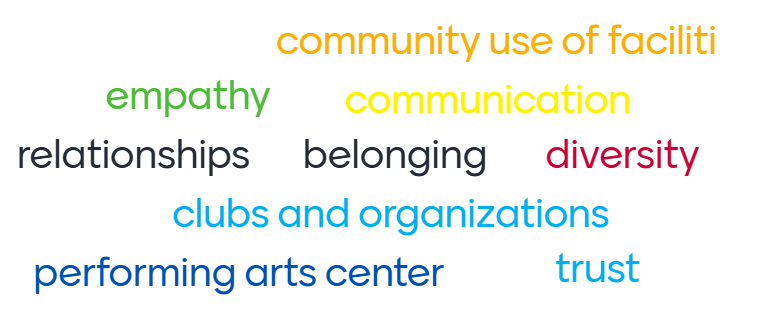
Community members at Glendale High shared that a sense of belonging at Glendale schools grows when communication, belonging, and relationships are prioritized. Responses highlighted how these elements help strengthen relationships among students, families, staff, and the broader community.
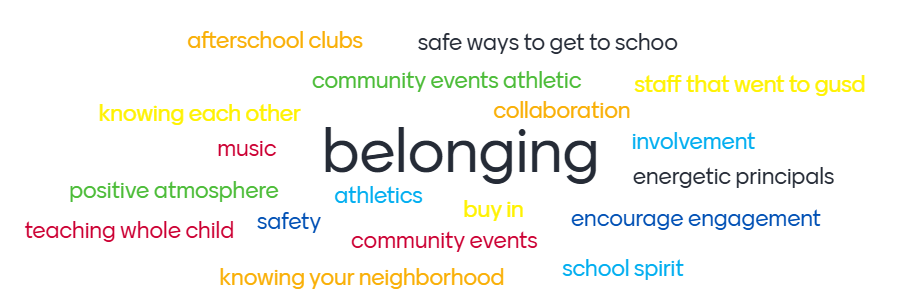
Feedback from the engagement meeting at Herbert Hoover High showed that music and teaching the whole child are key contributors to a strong sense of community at Glendale schools, with many participants also noting the importance of belonging.
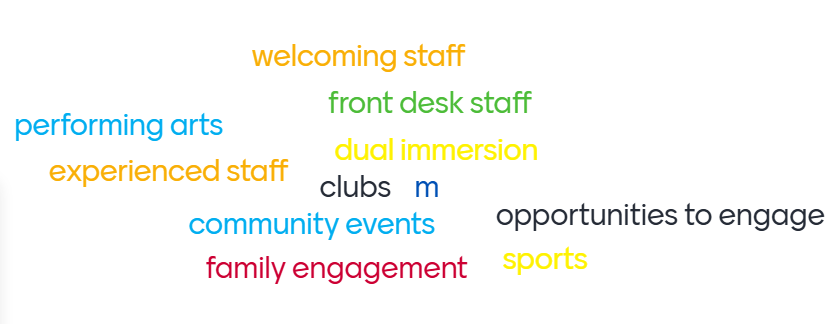
At Rosemont Middle, the community shared that a sense of community at Glendale schools is built through welcoming staff, dual immersion, and family engagement which creates spaces where students, families, and staff feel trust and openness.
Q2: What are the most critical needs for Glendale schools?
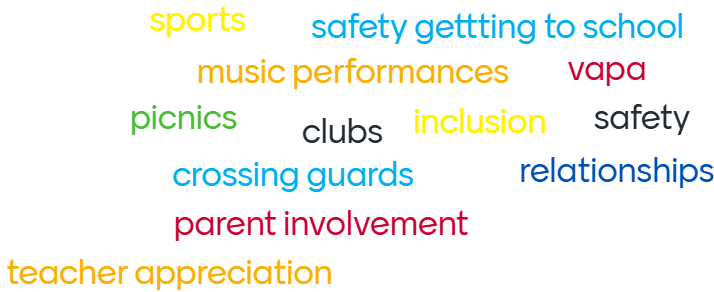
A strong sense of community at Glendale schools is created through safety, inclusion, and picnics according to participants at the R.D. White Elementary engagement event. Participants consistently shared that feeling welcomed, supported, and connected to one another plays a key role in making schools places where students and families want to be.
Q3: What’s on your wish list for the Glendale Facilities Master Plan?
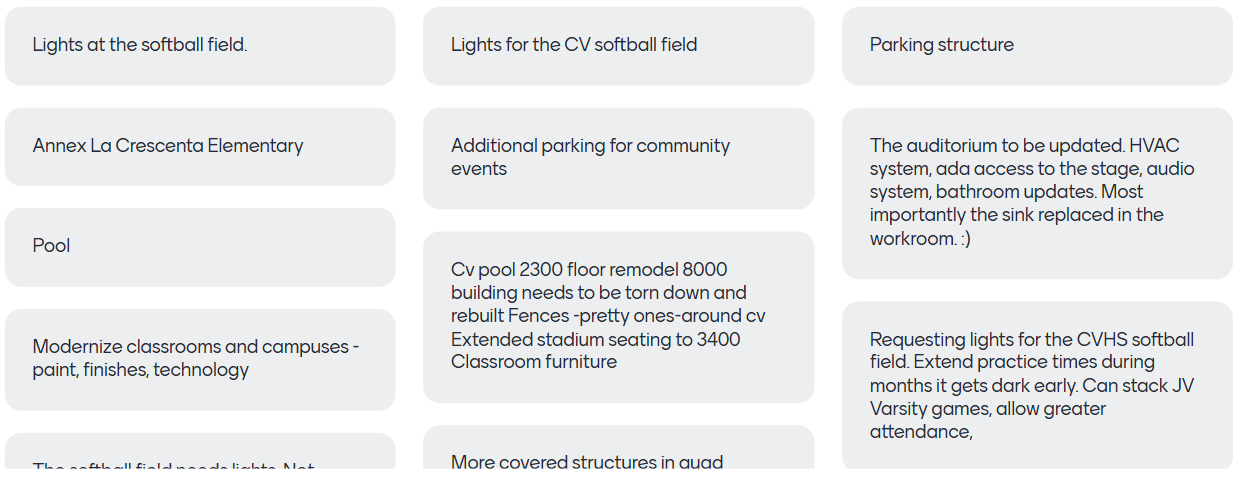
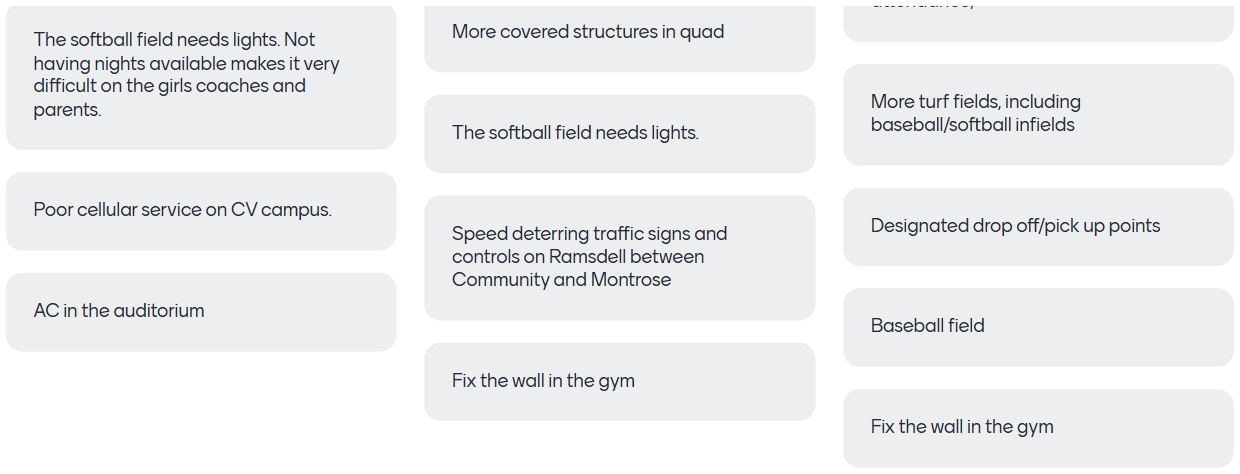
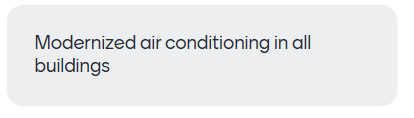
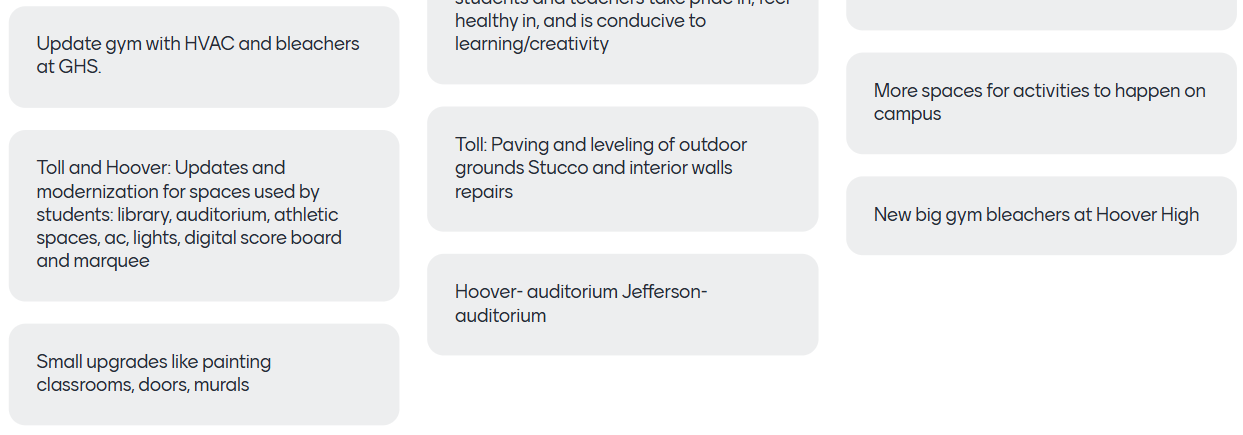
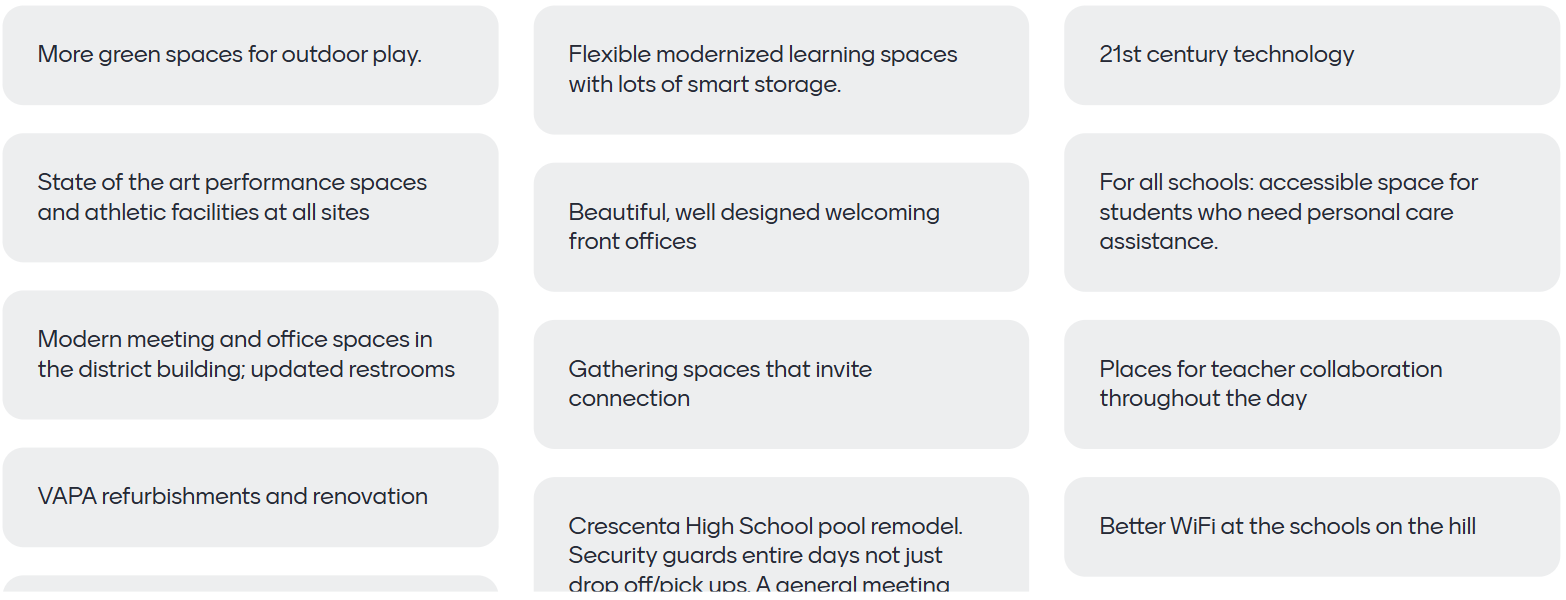
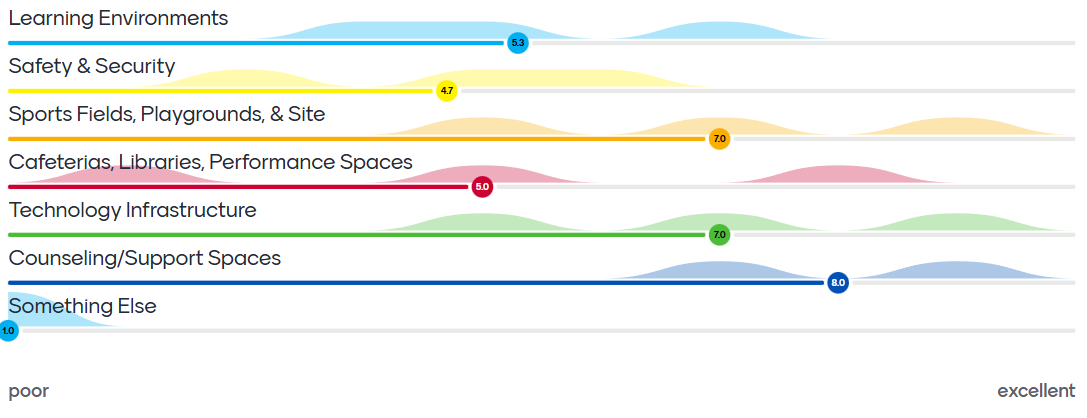
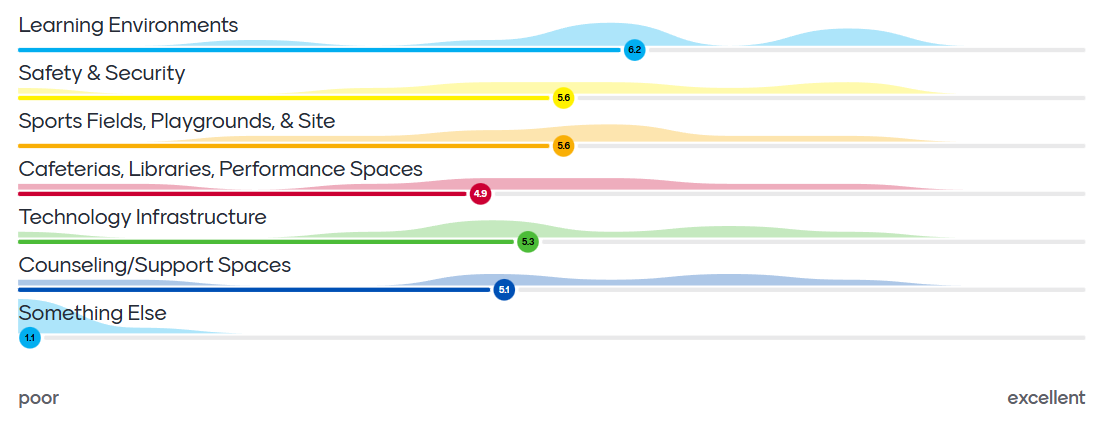
When asked to identify the most critical needs for Glendale schools, participants at Crescenta Valley High evaluated key areas including the learning environment, safety, sports and play, cafeterias, libraries, visual and performing arts, technology, and counseling. Responses rated from poor to excellent highlighted opportunities for improvement in cafeterias, libraries and performance spaces, while learning environments was more frequently rated as great.
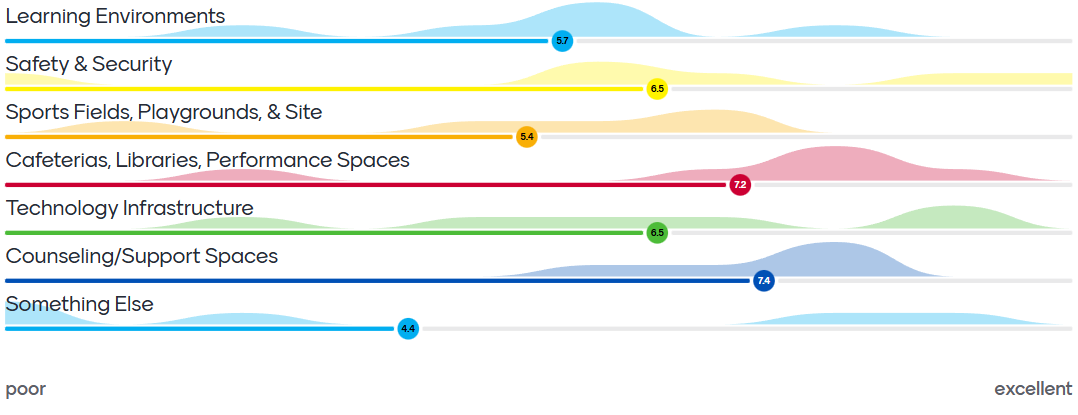
Community members at Glendale High were asked to rate the condition of essential school programs and spaces from learning environments and safety to technology, counseling, and the arts using a scale from poor to excellent. Results showed that sports field, playgrounds and site elements emerged as the most critical needs across Glendale schools.
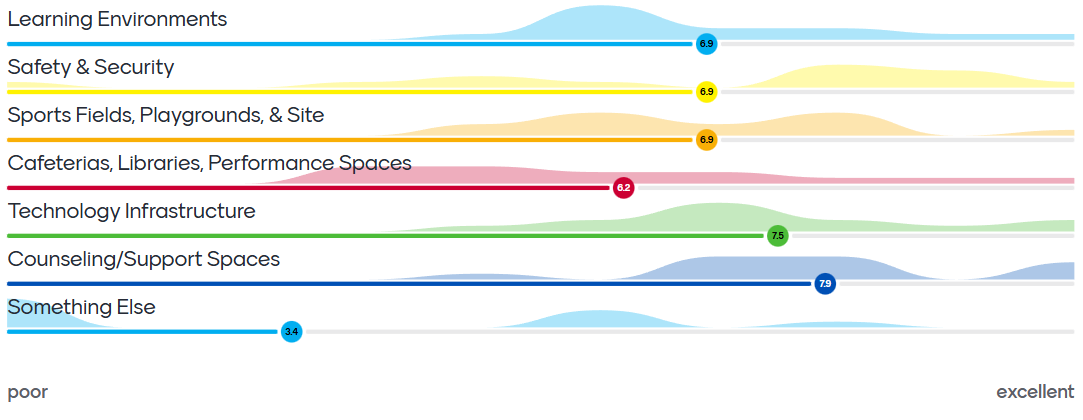
Participants identified the most critical needs for Glendale schools by rating areas such as learning environments, safety, sports and play, cafeterias, libraries, VAPA, technology, and counseling from poor to excellent. Feedback at Hoover High indicated that cafeterias, libraries and performance spaces require the greatest attention
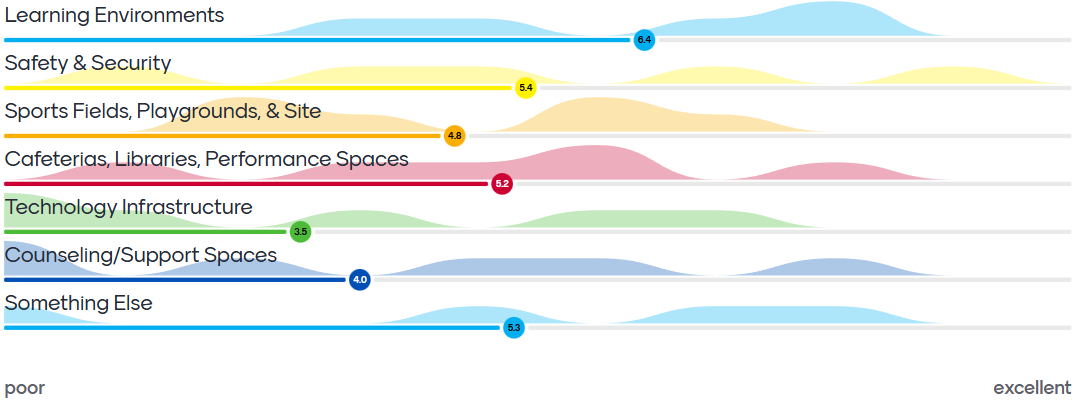
Feedback from community engagement at Rosemont Middle revealed a need to prioritize improvements in technology infrastructure, while learning environments was viewed more positively.
To better understand the most critical needs for Glendale schools, participants at R.D. White Elementary rated multiple categories from poor to excellent. The responses pointed to safety and security as a top priority, along with cafeterias, libraries and performance spaces.
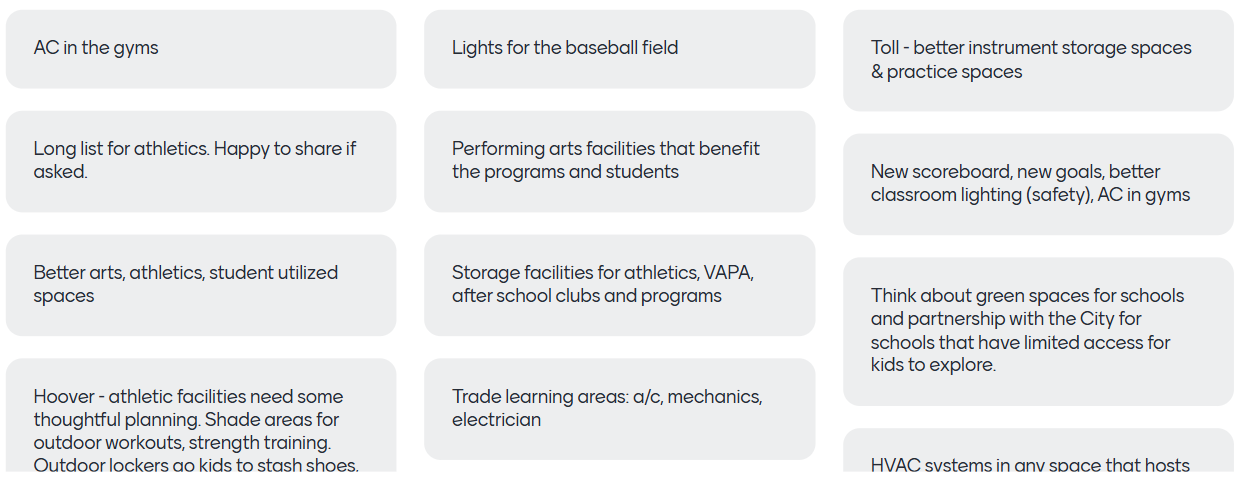
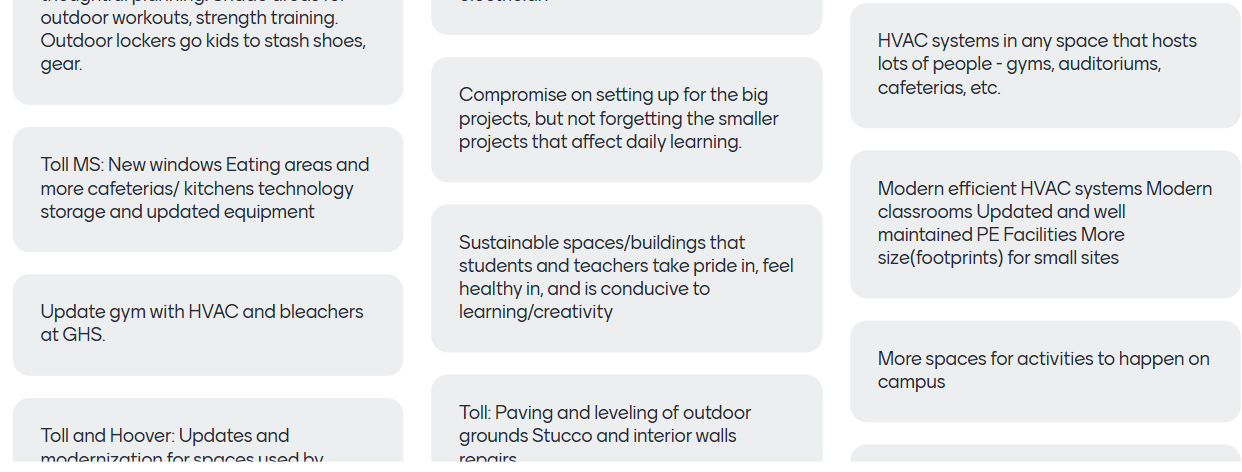

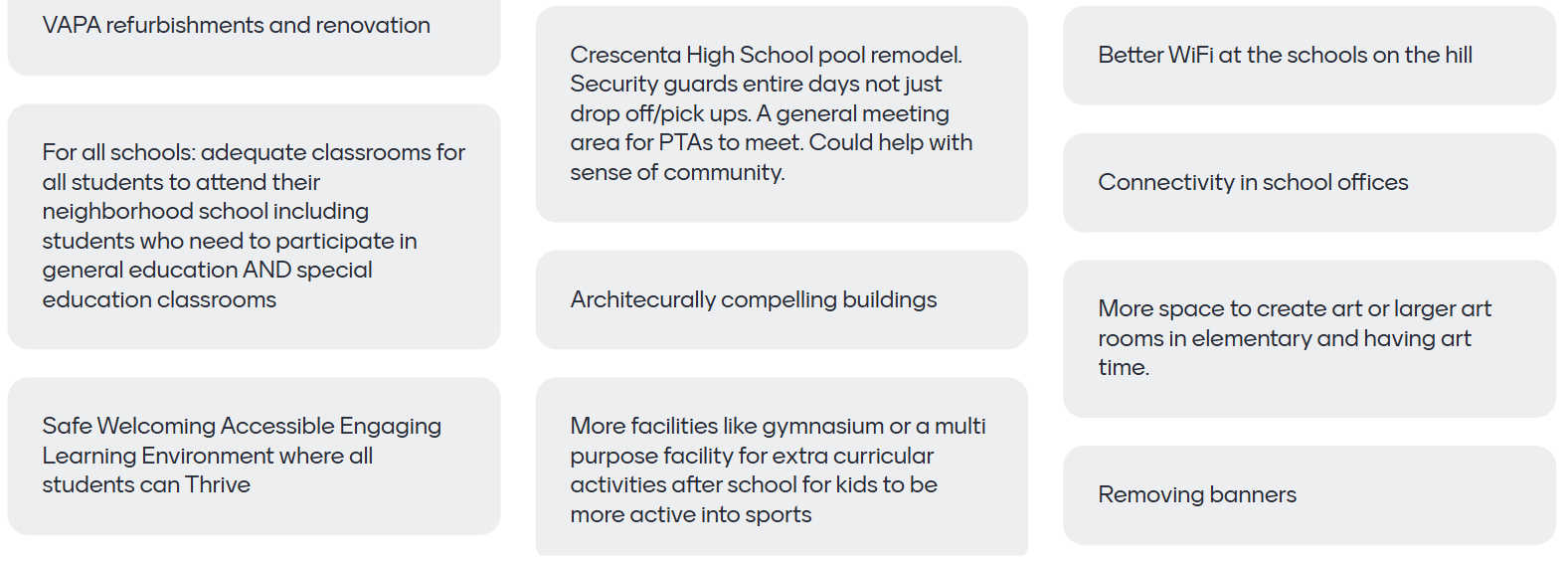

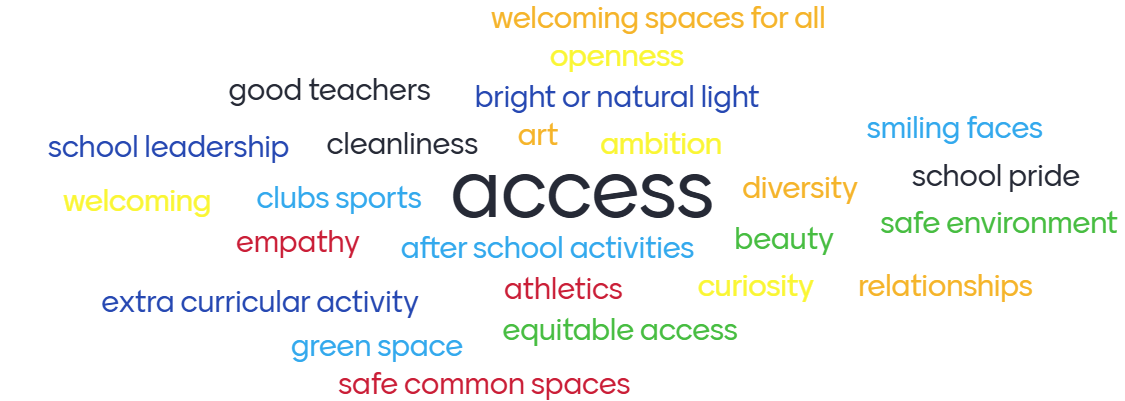
Participants at the Glendale District Office meeting shared that a strong sense of community at Glendale schools is shaped by equitable access, school pride, and green spaces. Responses emphasized how these elements help create welcoming, inclusive environments where students, families, and staff feel connected.
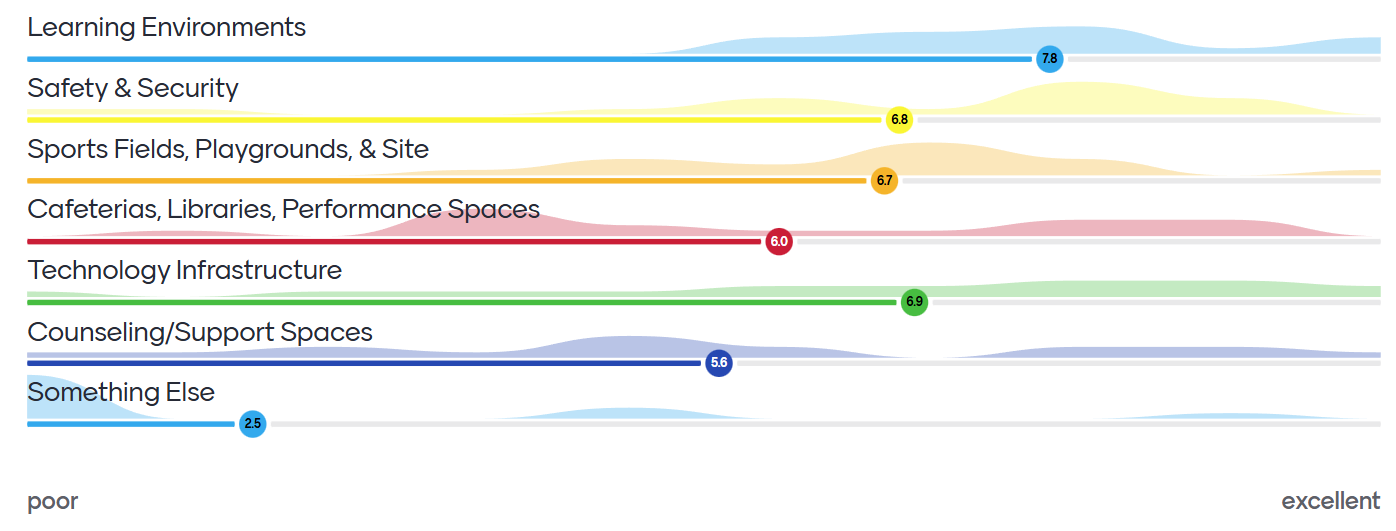
Participants at the District Office meeting were asked to rate the condition of key school categories. Results indicated that cafeterias, libraries, performance spaces and counseling/support spaces represent the most critical needs for Glendale schools moving forward.